
Danbury Weekly Police Blotter
The city's official source is the Danbury Arrest Logs page. One current report covered August 24 through August 28, 2026. Older samples point the same way. One spanned August 18 through August 25, 2025. Another ran January 29 through February 5, 2026. Each report carries its own stated window and run date.
Trust the dates printed inside the PDF. The day you opened the webpage means nothing for coverage. An arrest made after the window's end waits. The next report will carry it. Older arrests can show up if they fall inside the range. The cadence is weekly or multi-day, but the span shifts. No report promises a full seven calendar days.
The official Danbury landing page links to the current reports:
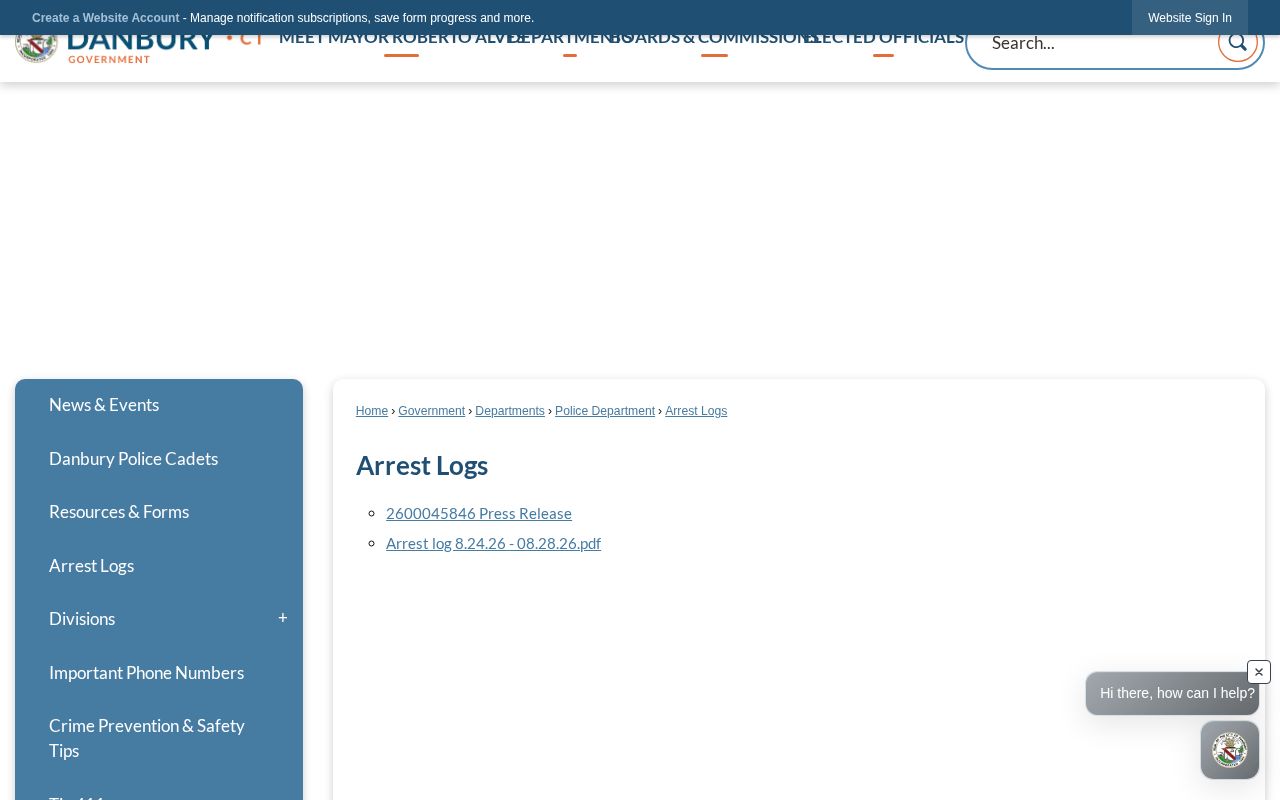
Open the PDF and read the header before searching any names. The title and window set the coverage.
Read Danbury Arrest Log Entries
Start with the timestamp, not the name. Danbury logs can list people with similar names. One arrest may also carry several charge rows. A future court date in the entry is a date, not a result. Move from the report window to the incident number, then to a court record when the outcome matters.
- Open the newest PDF on the official city page and record the “from” and “thru” dates.
- Search the PDF for the surname, then compare first name, age, arrest date, and address where shown.
- Note the incident number. It is the best Danbury Police reference for requesting the underlying record.
- Read each statute, charge description, and count as booked charges.
- Use the listed court date as a bridge to the Connecticut Judicial Branch case lookup.
- If the date falls after the current PDF, use Arrests Last 24 Hours for the honest same-day fallback sequence.
Docket numbers usually surface through the court, not the weekly log. "Disposition" means the court's recorded outcome. That could be dismissal, nolle, plea, acquittal, or conviction. Never infer it from the charge description.
Danbury Blotter Field Guide
The sampled adult PDFs share a consistent municipal field set. They offer no photo feed or full bond roster. The table separates what the log itself shows from what needs another source.
| Danbury field | Meaning and limit |
|---|---|
| Report run date and date window | Defines when the PDF was produced and which arrest dates it aims to cover. |
| Name, race, sex, age, address | Police-entered identity details. Sensitive fields may be limited in another record. |
| Incident number | Local case reference used to locate the agency record. |
| Arrest date and time | Police event time, which differs from publication, court, or DOC intake time. |
| Court date and time | Scheduled appearance information, not a disposition. |
| Statute, description, counts | Charges recorded at arrest. Multiple counts are not multiple convictions. |
| Photograph or booking number | No routine public field was verified in the Danbury PDFs. |
| Current facility | Not established for every entry. Check DOC only if state custody may have begun. |
An arrest publication is not a full incident packet. A packet can hold reports, probable-cause material, bond papers, transport records, fingerprints, and an identification photo. Connecticut law and the specific record decide access. Ask for a named document rather than assuming every attachment is public.
Weekend Arrests in Danbury Logs
A multi-day window can include Saturday and Sunday. Holiday arrests can appear as well. That does not mean Danbury posts a new file each day. The city promises no weekend or holiday release time. One report generated after a window closes may bundle several days together. That makes the blotter a catch-up tool, not a live feed.
Timing check: weigh the arrest timestamp, the report window, and the run date. Those are three different moments, so a late-week arrest may not surface until the next public report.
An entry never proves someone stayed in custody. Release on a promise or bond may have come first. The person may have already reached court. State custody may also have begun before the weekly file appeared. Bridgeport Correctional Center serves the Danbury court area. That link proves nothing about each arrestee. The DOC locator covers current state custody. It includes some people awaiting trial, but not every local arrest.
Find Older Danbury Blotters
Older reports can stay reachable through the Danbury Document Center after leaving the main page. The city publishes no fixed archive depth or roll-off schedule. A dead link does not mean the record was destroyed or never created.
- Search the Arrest Logs page and Document Center by the desired date range.
- Ask Danbury Records & Property for the record and its retention location if the link is gone.
- Ask whether it remains electronic or on paper, was transferred, or was destroyed under an approved schedule.
- Use the Connecticut State Library public-records program for a retention-schedule question.
The State Library's municipal schedules set minimum records-management rules. No specific retention period for Danbury arrest-log PDFs or photos is published. Nothing shows modern Danbury arrest logs moving to the State Archives. The archive holds confirmed historical transfers, not current police records.
For an underlying report, the Records & Property Division handles requests directly. The form lists $0.50 per page. It also charges $2 per disc for audio, video, or photos. Turnaround times are not promised. Give the name, date, location, and incident or CFS number if you have them.
Fairfield Police Blotter Patterns
Fairfield County towns show three different visibility patterns. Danbury posts a weekly PDF. Norwalk auto-generates official daily arrest, citation, and incident logs at 6 a.m. Bridgeport publishes specified-period activity with a monthly-style archive. Stamford runs an official records channel but posts no public arrest-log page. The official Bridgeport Police Blotter shows the separate municipal archive:
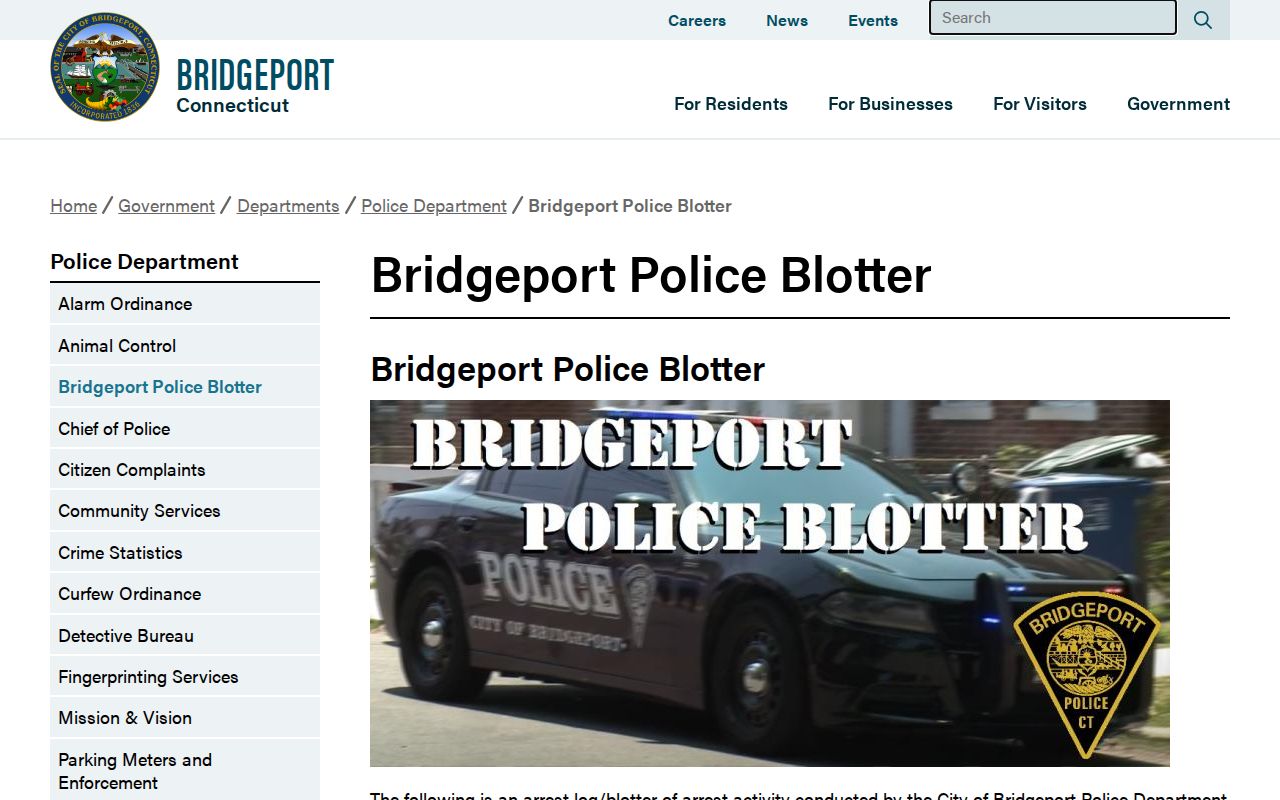
Bridgeport's juvenile exclusion and archive layout are Bridgeport's alone. They leave Danbury's weekly field set untouched. No countywide Fairfield roster exists.
The Norwalk Daily Logs page shows another official cadence:
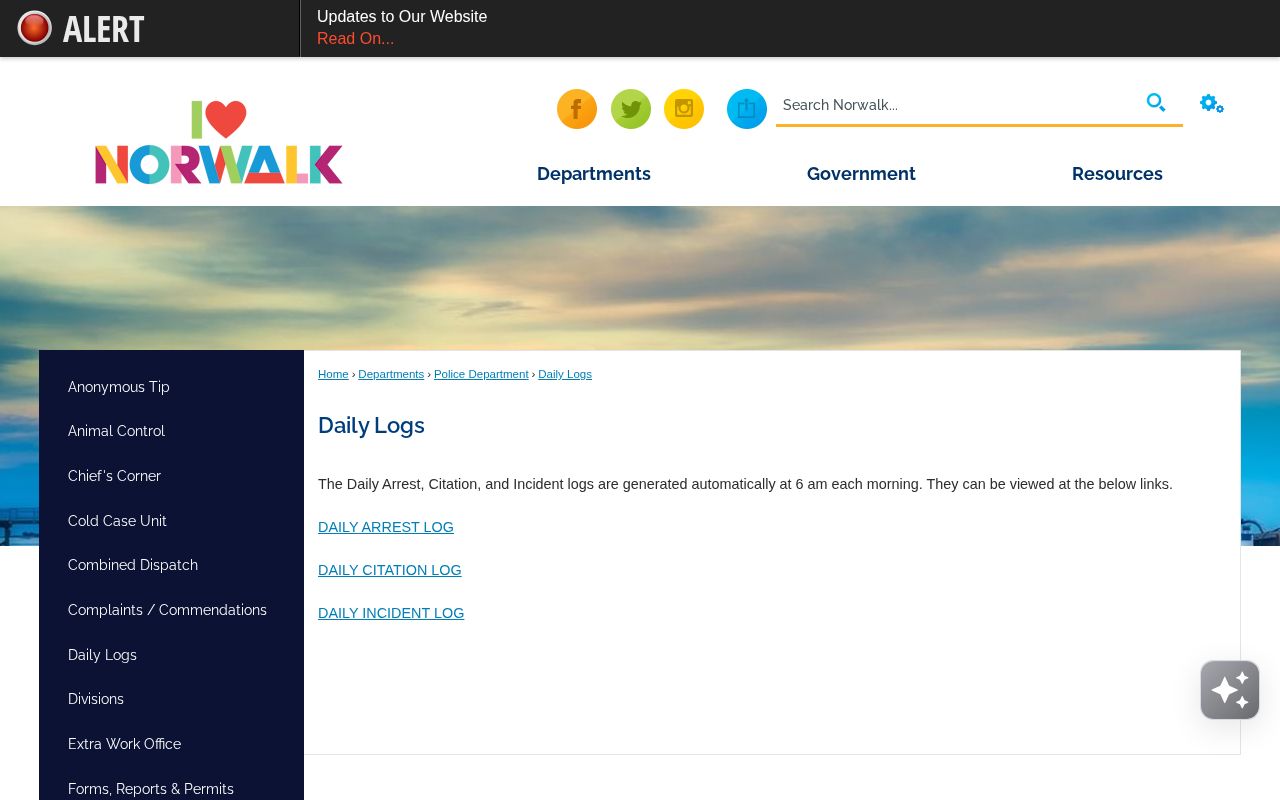
Go straight to the city that made the arrest for blotter details. Danbury sits in a region where each department runs its own records, and merging separate cities into one county feed would blur real differences in timing, fields, and public access.
News Is Not a Blotter
Local news adds color that a bare roster never will. Patch runs recurring Danbury Police logs plus selected crime stories. The Connecticut Post and News 12 both cover Danbury. They also report on the wider region when events warrant. Still, none of these outlets functions as an official arrest register. A story may run days after the arrest itself. Plenty of arrests in Danbury never get covered at all.
For searchable local reporting, try the News-Times regional site. It is not a running official arrest list.
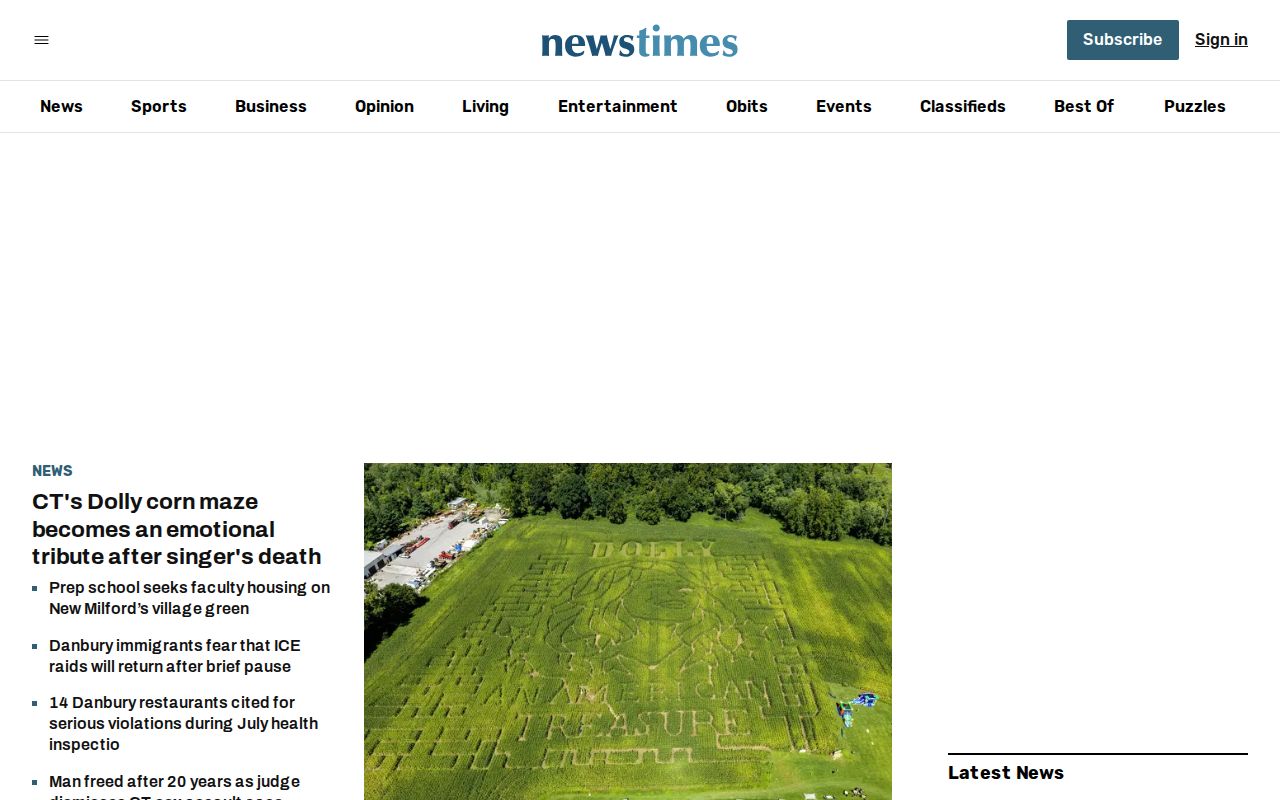
Treat any photo in a news story with care. It might show the scene. It could pull from a file, come from a reporter, or arrive from police. That does not make it a booking photo. It proves nothing about an agency's photo practices.
RecentlyBooked's Fairfield page is unofficial too. Its claimed update pace cannot replace a real same-day feed. Its county-sheriff framing does not match how Connecticut works. For anything that matters, rely on police, court, and DOC records first.
Confirm Fairfield Arrest Outcomes
Match the record to the agency that owns it. Danbury Police holds the municipal arrest and incident record. The Judicial Branch holds the docket and its outcome. CT DOC shows current state custody. CT SAVIN, through VINELink, sends notices on selected court and custody changes. Each tool does one job. None covers the rest.
Some records stay closed by law. Juvenile and youthful-offender material is excluded from public channels. Sealed or erased cases, plus protected victim and witness details, can also be withheld. A blank result might reflect a statute, a timing gap, a release, or a short archive. Never treat one missing entry as proof of anything.
Logs linger online after cases change. A count listed in a police log may later be reduced, dismissed, or nolled while the old entry stays up. Pull the court outcome and set it beside the original arrest record before drawing conclusions.
Public Record Search
Sponsored Results